
Does Turnitin Detect ChatGPT in Academic and General Work

Many writers, whether students or general content creators, wonder if Turnitin can detect ChatGPT-generated text.
Users often face uncertainty about whether AI-assisted writing counts as plagiarism or triggers AI alerts.
This article takes a fresh look at how Turnitin identifies ChatGPT content, what factors influence detection, and why understanding this matters for anyone submitting written work. Read on for clear guidance and practical insights.
Does Turnitin Detect ChatGPT?
Yes, Turnitin can detect ChatGPT content, but its accuracy depends on text characteristics and originality.Turnitin primarily checks for similarity and potential plagiarism, and its AI detection tools analyze patterns typical of ChatGPT writing to flag content.
How AI Detection Works Within Turnitin
Turnitin’s AI detection tool integrates alongside its traditional similarity checks. When a paper is submitted, the system scans the text for patterns associated with AI-generated writing, such as uniform sentence structures, overuse of neutral phrasing, and low variability in syntax.
It compares these patterns against a database of known AI outputs, including samples from ChatGPT models, and assigns a confidence score indicating the likelihood of AI authorship.

Key Indicators of AI-Generated Writing
Turnitin looks for several markers that commonly appear in ChatGPT content. These include unusually consistent sentence length, repetitive phrasing, overly formal or generic vocabulary, and abrupt transitions between topics.
Sections lacking personal insight, reflection, or context-specific examples may also increase the AI likelihood score. Students can check flagged areas by reviewing these characteristics and adjusting phrasing or adding original analysis.
Accuracy and Limitations of Turnitin AI Detection
While Turnitin can flag ChatGPT content, it is not infallible. Highly human-like AI writing or extensively edited AI drafts may evade detection, while highly polished student writing could be misidentified as AI-generated.
The system provides a probability score rather than a definitive label, and instructors often use these results alongside other indicators. Understanding these limitations helps students interpret their reports and take corrective actions before submission.
Awareness of how Turnitin detects AI tools sets the stage for understanding why certain content is flagged, which leads naturally into exploring the common triggers and circumstances behind AI alerts in submitted papers.
Why Turnitin May Flag ChatGPT Content
Common Triggers for AI Alerts
Turnitin may flag ChatGPT content when the text exhibits patterns typical of AI generation. Examples include uniform sentence structures, repetitive phrasing, and an unusually high consistency in grammar or tone.
Large sections lacking personal insight, context-specific examples, or critical analysis are also more likely to trigger alerts. Additionally, content that closely mirrors publicly available AI outputs can increase the likelihood of being flagged.
Role of Writing Style and Originality
Writing style heavily influences Turnitin’s AI detection. Text that appears overly generic, formulaic, or mechanically constructed can resemble ChatGPT outputs, even if written by a human.
Conversely, highly original phrasing, unique vocabulary, and contextual reflections reduce the probability of being flagged. Students should focus on integrating personal analysis and varied sentence structures to maintain originality while avoiding unnecessary AI-like patterns.

How Citations and Formatting Influence Detection
Proper citations and structured formatting play a subtle role in AI detection. Turnitin examines how information is presented; heavily copied or poorly cited material may resemble AI-generated text due to lack of author-specific nuance.
Correctly formatted references, quotation marks, and in-text citations help distinguish human-authored sections from AI-generated content, ensuring that similarity scores and AI alerts are interpreted accurately.
Understanding the triggers behind Turnitin flags provides a foundation for evaluating how the system handles different types of assignments, leading into a closer look at detection across essays, lab reports, and creative writing.
How Turnitin Evaluates ChatGPT Across Different Types of Assignments
Detection in Essays and Research Papers
Turnitin applies its AI detection algorithms most extensively in essays and research papers. It analyzes sentence structure, vocabulary patterns, and the logical flow of arguments to identify AI-generated content.
Submissions with large sections of generalized or overly polished text without contextual examples are more likely to be flagged.
Incorporating personal insights, citations, and discipline-specific terminology can reduce the likelihood of detection while maintaining academic integrity.

Detection in Lab Reports and Technical Writing
In lab reports and technical documents, Turnitin focuses on both language patterns and structural conventions.
AI-generated text often lacks the precise data interpretation or procedural nuance expected in these assignments. Standardized phrasing or generic explanations can trigger alerts.
To minimize false positives, students should include detailed methodology, experiment-specific observations, and their own analytical commentary.
Detection in Creative or Non-Academic Content
Turnitin’s AI detection is less straightforward for creative or non-academic content because these assignments vary widely in style.
Uniform sentence patterns or overly formal prose in stories, reflection pieces, or informal writing can still be flagged.
Including personal voice, varied syntax, and contextually rich narrative elements helps differentiate human-authored content from ChatGPT outputs.
Examining how Turnitin evaluates different assignment types provides context for the factors that influence detection, setting up a closer look at what specifically affects its accuracy.
Factors That Affect Turnitin’s ChatGPT Detection Accuracy
Length and Complexity of the Submitted Text
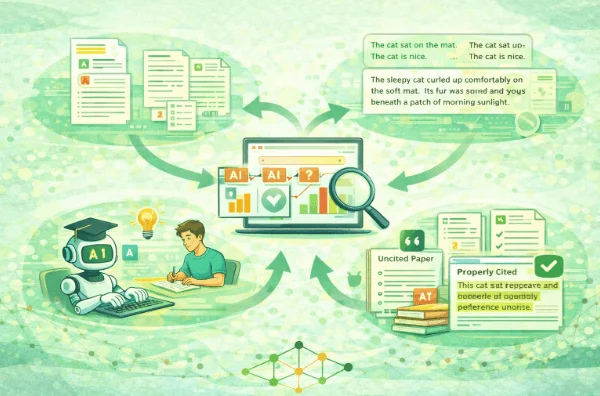
Turnitin’s AI detection is influenced by both the length and complexity of a submission. Longer papers provide more data for pattern recognition, making it easier to detect AI-generated structures.
Conversely, very short texts may not contain enough information for reliable analysis. Complex sentences, diverse paragraph structures, and nuanced argumentation reduce the likelihood of being flagged as AI content.
Writing Style and Vocabulary Patterns
Consistent, uniform writing style and repetitive vocabulary can increase Turnitin’s probability of identifying ChatGPT content.
Human-authored work typically exhibits variation in sentence length, tone, and word choice. Incorporating distinctive phrasing, idiomatic expressions, and subject-specific terminology helps differentiate genuine writing from AI-generated text.
Use of AI Assistance vs Fully Human Writing
Partial use of AI tools, such as for brainstorming or paraphrasing, may produce sections that resemble ChatGPT outputs.
Fully human writing with personal insights is less likely to trigger detection. Students should be mindful of how AI assistance integrates into their work, ensuring that the final text reflects individual understanding and analysis.
Formatting, Citations, and Quoted Material
Turnitin also considers how content is structured and cited. Properly formatted references, in-text citations, and clearly marked quotes can reduce false positives.
Conversely, inconsistent formatting or uncited material may mimic AI-style text, increasing the detection likelihood. Attention to detail in presentation helps Turnitin distinguish human-authored content from AI-generated text.
These factors collectively determine how accurately Turnitin can detect ChatGPT content, leading naturally into the most common questions students and general users have about AI detection.
FAQ

1. Can Turnitin Detect ChatGPT in Academic Papers?
Yes. Turnitin can detect ChatGPT content in academic papers by analyzing patterns typical of AI-generated text, including sentence structure, tone consistency, and vocabulary use.
2. How Do I Make Sure ChatGPT Is Not Detected?
The safest approach is to rely primarily on your own writing. If AI tools are used, revise extensively, add personal insights, examples, and subject-specific analysis to ensure the text reflects your voice.
3. Will Turnitin Mistake Human Writing for ChatGPT?
Occasionally. Highly polished, uniform, or formulaic writing can resemble AI-generated text. Instructors often review flagged sections to distinguish genuine human writing from AI outputs.
4. Can Editing Reduce the Chances of AI Detection?
Yes. Rewriting sentences, adding nuanced commentary, varying sentence structures, and including personal reflections can lower the likelihood of being flagged as AI-generated.
5. Can Turnitin Detect ChatGPT if You Paraphrase?
It depends. Simple paraphrasing may still resemble AI patterns. Thorough revisions that integrate your own analysis, vocabulary, and examples are more likely to pass undetected.
6. Are AI Detection Results Different for Students vs Professionals?
Detection methods are the same, but context matters. Professional writing may naturally include specialized terminology or stylistic consistency that resembles AI, so interpretation can vary by audience and assignment type.
Conclusion
Understanding does Turnitin detect ChatGPT helps students and general writers navigate AI-assisted content responsibly.
This article explored how Turnitin identifies ChatGPT text, the common triggers for AI flags, how detection varies across assignment types, and factors that affect accuracy.
By knowing how AI detection works and applying practical writing strategies, users can ensure their submissions are interpreted fairly while maintaining originality and academic integrity in both academic and non-academic contexts.